Hear an idea
become sound.
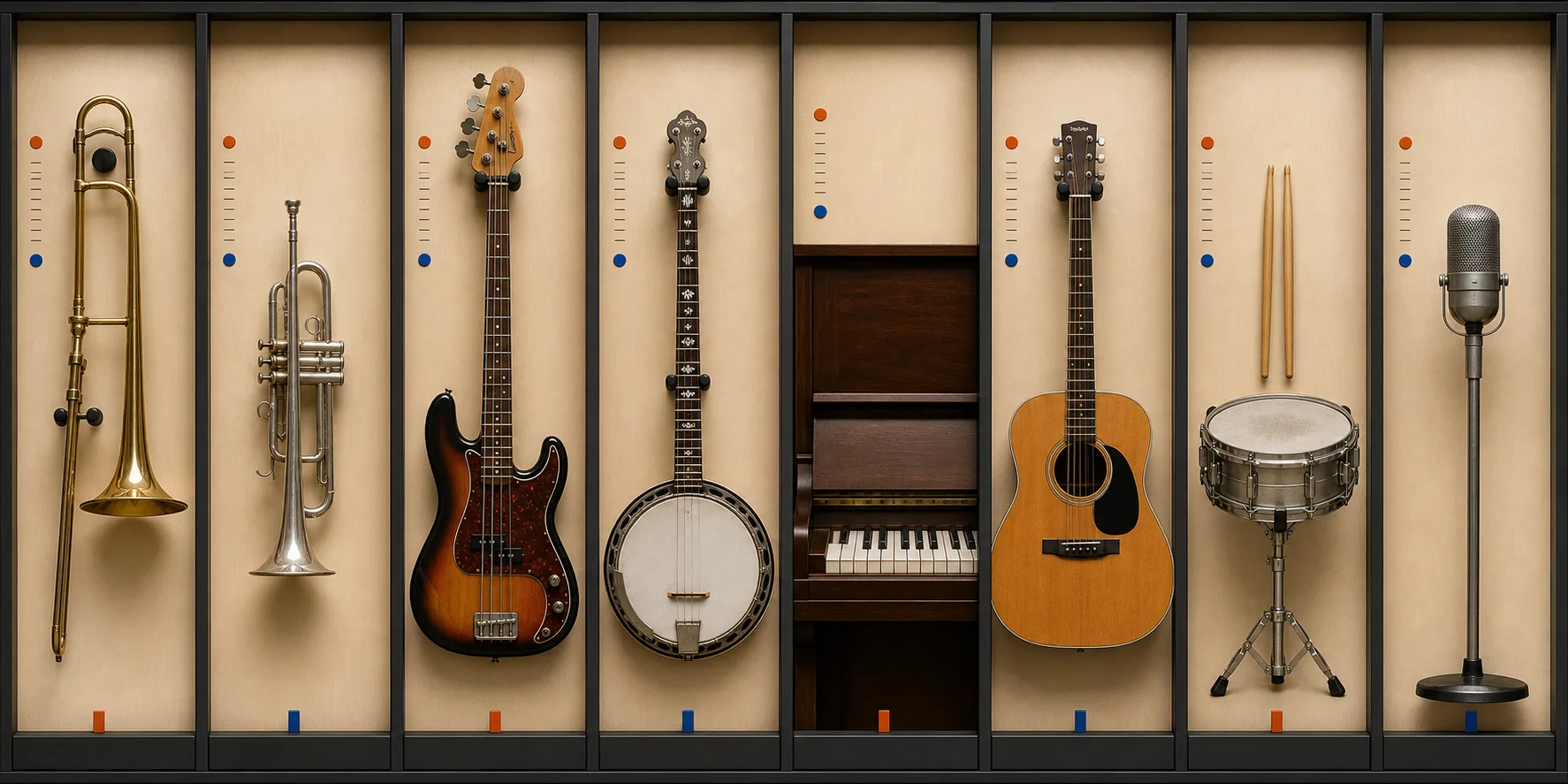
Eight instruments. Maths and physics inside every one. Free, playable, and built for the classroom.
ACTIVE EXHIBIT / TROMBONE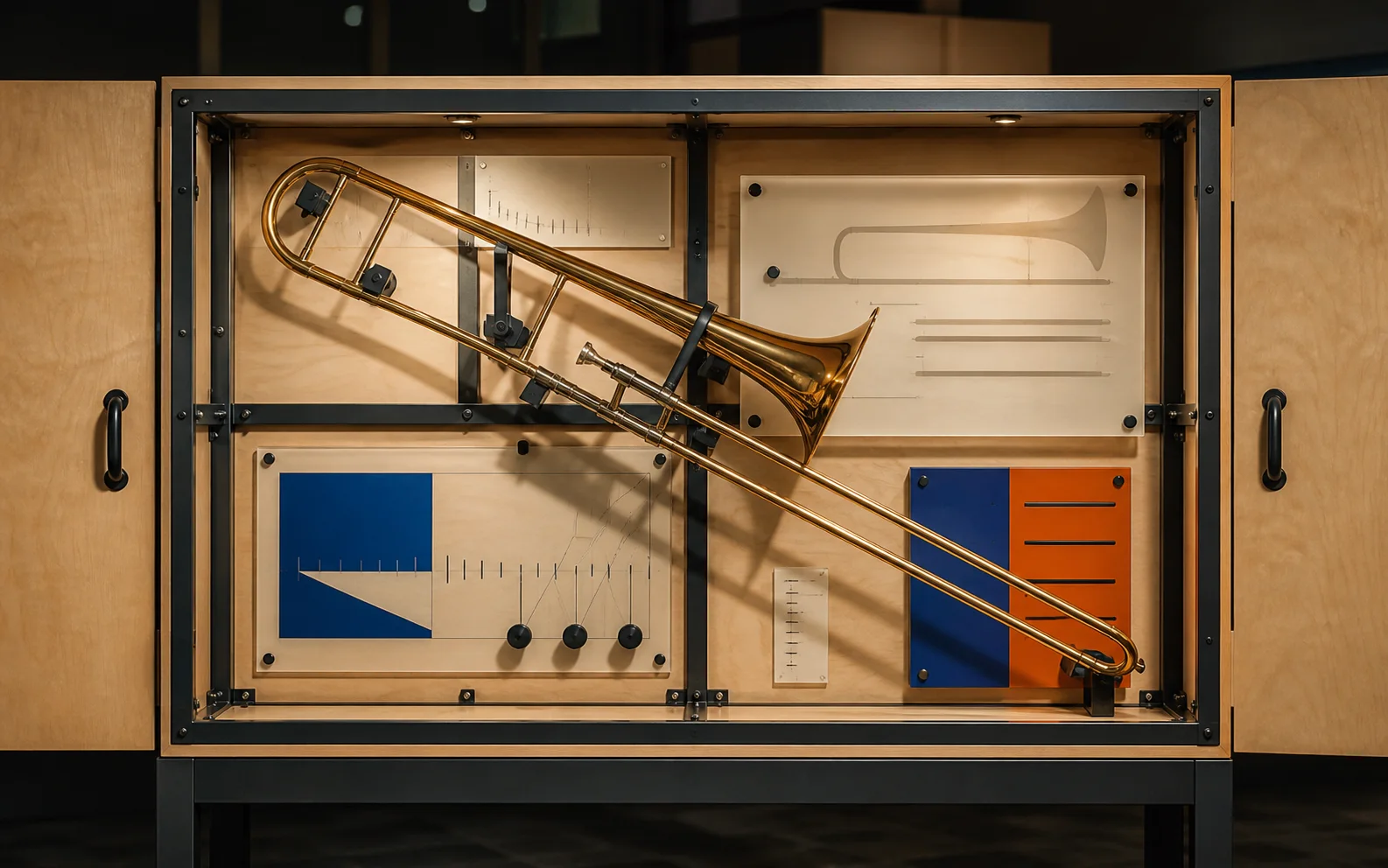
MECHANISMA moving air-column ruler
One state.
Four views.
01MOVE
Change the real mechanism.
02SEE
Watch the geometry respond.
03HEAR
Listen to the same state.
04NOTICE
Name the pattern you just proved.
For the next five minutes—or the next five years.
01ClassroomPut one working demonstration on the projector.Short, teacher-ready apparatus for waves, ratios, rhythm, resonance and instrument physics.Open classroom mode02Maths floorTurn the timetable into sound.Fractions, coordinates, graphs, counting, logarithms and acoustics—things to drag, strike and hear.Explore the maths floor03Music × MathematicsFor older students: the theorem machines.Ten university-level exhibits — counterpoint, pitch-class sets, EDO, factorial melodies and modular transformations. Not for the school floor; for the curious beyond it.Enter the theorem suite
FROM THE STUDIO
“Most apps teach you to press the right thing at the right time. Atlas teaches you the instrument.”
Jason Zac · Nathaniel School of Music
Questions about Atlas
- What is Atlas?
- Atlas is a free set of interactive labs that show the maths and physics inside every instrument. You move a real mechanism, such as a string, a slide or a drum rhythm, then watch it and hear it respond.
- Who is Atlas for?
- Atlas is built for school classrooms and curious students, from primary school to older students who enjoy the theorem machines. It covers piano, guitar, drums, voice, trumpet, trombone, bass and banjo.
- Is Atlas free?
- Yes. Atlas is free for everyone, with no account, no score and no gate.
- Does Atlas work on a phone or a Mac?
- Atlas runs in a web browser, so there is nothing to install. Turn the sound on to hear each demonstration.
- Who made Atlas?
- Atlas was made by Jason Zac at Nathaniel School of Music in Bangalore, India.